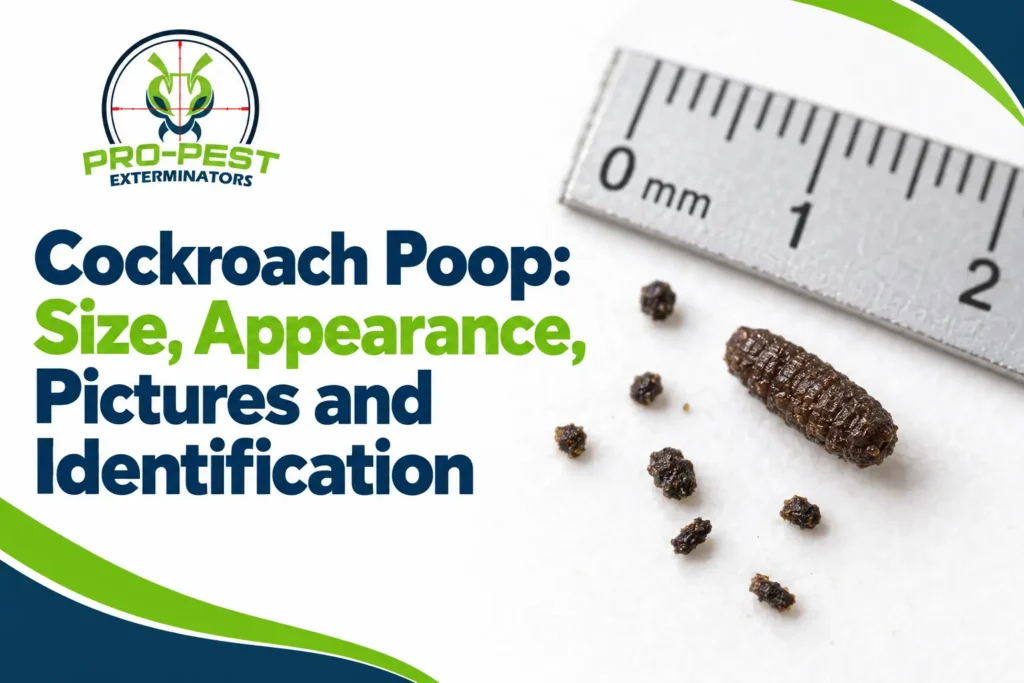
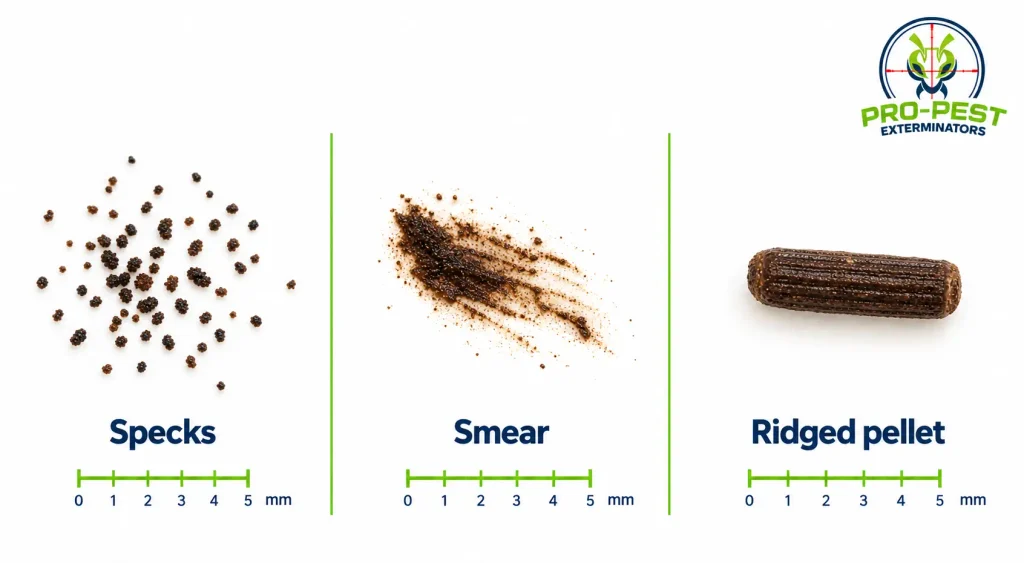
Cockroach poop has two main appearances. Small cockroaches leave dark specks that resemble ground pepper or coffee grounds. Large cockroaches produce solid, cylindrical pellets with blunt ends and fine ridges along the sides.
Size, shape and location provide the clearest identification clues. Tiny clustered dots inside kitchen cabinets often come from German cockroaches. Larger ridged pellets near drains or damp areas usually point to a larger species.
- How to Identify Cockroach Poop
- Cockroach Poop Size by Species
- Small Cockroach Droppings
- Large Cockroach Pellets
- Cockroach Poop Versus Mouse Droppings
- Cockroach Poop Versus Egg Cases
- Cockroach Poop on a Bed or Mattress
- What the Droppings Reveal About the Infestation
- Health Risks Associated With Cockroach Waste
- How to Clean Cockroach Poop Safely
- What to Do When Droppings Return
- Frequently Asked Questions
- What does cockroach poop look like?
- Does cockroach poop mean there is an infestation?
- How can I tell whether cockroach droppings are fresh or old?
- Why do cockroach droppings keep appearing in the same place?
- Can cockroach poop make a person sick?
- Can cockroach poop appear on walls and ceilings?
- What should I do if I find cockroach poop in a kitchen cabinet?
- Does cleaning cockroach poop get rid of cockroaches?
How to Identify Cockroach Poop
Check the colour, shape, texture and location of the material. These features provide more reliable evidence when considered together.
- Colour: Dark brown, brownish-black or black
- Shape: Specks, spots, smears or cylindrical pellets
- Texture: Dry particles, stained marks or solid ridged pellets
- Ends: Blunt on large roach pellets
- Location: Near food, moisture, warmth or a concealed hiding area
Small species produce fine particles and dark spots. German cockroaches often leave clusters of brown or black dots in concealed kitchen areas, according to NC State Extension.
Large species produce formed pellets. These pellets usually have blunt ends and fine lengthwise ridges that become visible under magnification.
Moisture can mix with fecal material and create dark smears. These marks commonly appear along cabinet corners, drawer runners, wall joints and appliance gaps.
Quick Identification Table
| Feature | Small cockroach | Large cockroach |
|---|---|---|
| General form | Specks, spots or coarse grains | Solid cylindrical pellets |
| Colour | Dark brown to black | Dark brown to black |
| Surface | Grain-like or stained | Fine lengthwise ridges |
| Ends | Usually too small to assess | Blunt or squared |
| Common locations | Cabinets, drawers and appliances | Drains, basements and damp areas |
Cockroach Poop Size by Species
Cockroach poop size depends on the species and life stage. Household specimens range from tiny marks under one millimetre to visible pellets several millimetres long.
A study comparing household species measured German cockroach feces at about 0.70 millimetres for males and 0.95 millimetres for females. American cockroach feces measured about 3.93 to 4.35 millimetres.
A separate identification key describes cockroach pellets as 0.5 to 4.5 millimetres long. It identifies cylindrical shape, lengthwise ridges and squared ends as their main structural features.
| Likely species | Approximate size | Main appearance | Likely location |
|---|---|---|---|
| German cockroach | About 0.7 to 1 mm | Pepper-like dots or dark spots | Cabinets, hinges and appliance gaps |
| American cockroach | Commonly around 4 mm | Cylindrical pellet with blunt ends | Drains, basements and utility areas |
| Brown-banded cockroach | Small specks or spots | Tiny dark marks | Furniture, closets and upper shelves |
| Other large species | Several millimetres | Dark pellet or smear | Damp cracks and sheltered areas |
Some American cockroach pellets can reach about ¼ inch, or 6 millimetres. The University of Arizona describes these larger pellets as having flat ends.
Size alone cannot identify the species. The body size, colour, markings and preferred habitat separate the main types of cockroaches more accurately than fecal measurements alone.
Small Cockroach Droppings
German cockroaches leave the small dark specks most often found in kitchens. The particles resemble coarse pepper, coffee grounds or dots made with a fine black pen.
Check these locations:
- Inside cabinet corners
- Around cabinet hinges
- Along drawer runners
- Beneath sinks
- Behind refrigerators
- Around cooking appliances
- Near coffee machines and dishwashers
- Beside stored food and pet bowls
The pattern provides useful information. A concentrated group of spots usually marks a regular hiding, feeding or movement area.
German cockroaches spend most of the day inside narrow gaps close to food, warmth and moisture. Several marked surfaces around one appliance suggest a nearby harbourage.
Cockroach feces also contain aggregation chemicals. These chemicals encourage other cockroaches to gather in the same protected area.
Clean the marked surface and place a sticky monitor against the nearest wall edge. New spots or trap catches during the following nights confirm current movement.
Large Cockroach Pellets
American and other large cockroaches produce visible pellets. These pellets have a solid cylindrical form, fine lengthwise ridges and blunt or flat ends.
Use a magnifying glass or phone camera with macro mode to check the surface. Ridges provide stronger identification evidence than colour.
Large pellets commonly appear near:
- Floor drains
- Pipe openings
- Under-sink cabinets
- Basements
- Utility rooms
- Water heaters
- Damp wall gaps
- External entry points
American cockroaches favour sewers, drains and warm utility spaces. Pellets around plumbing require inspection of drain covers, pipe gaps and nearby wall openings.
Dark pellets can also appear away from the original harbourage because cockroaches deposit waste as they travel. Follow the evidence towards moisture, shelter and connected edges.
Cockroach Poop Versus Mouse Droppings
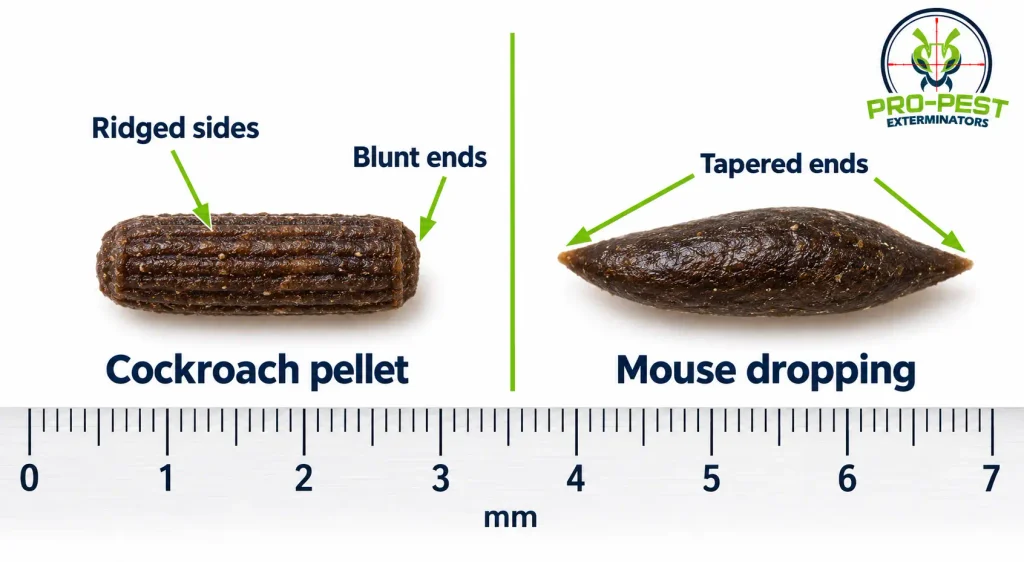
Large cockroach pellets and mouse droppings can have a similar length. Their ends, surface and surrounding evidence separate them.
| Feature | Large cockroach pellet | Mouse dropping |
|---|---|---|
| Ends | Blunt or squared | Usually tapered or pointed |
| Surface | Fine lengthwise ridges | Generally smooth |
| Shape | Short barrel or cylinder | Elongated grain shape |
| Nearby evidence | Egg cases, shed skins or live roaches | Gnaw marks, nesting material or rub marks |
| Common location | Drains, damp gaps and appliances | Wall edges, cupboards and storage areas |
The University of Arizona identifies flat ends as a key feature of American cockroach pellets. Mouse droppings of a similar length usually taper towards the ends.
Colour alone cannot separate the two pests. Both materials can appear dark brown or black.
Do not crush or handle unidentified droppings with bare hands. Rodent waste requires different safety precautions, so professional identification becomes important when the shape remains unclear.
Cockroach Poop Versus Egg Cases
Cockroach droppings do not have the organised capsule shape of an egg case. Small fecal particles appear irregular, and large pellets lack the raised seam found on an ootheca.
A cockroach egg case usually has:
- A firm capsule or bean-like shape
- A tan, brown or reddish-brown shell
- A structured seam along one edge
- A regular and symmetrical profile
- A length of several millimetres
An egg case has greater significance when droppings, nymphs and adults appear in the same location. These combined signs indicate that cockroaches use the area for shelter and reproduction.
The shape, seam and discovery location help distinguish cockroach eggs from fecal pellets, seeds and food fragments. Preserve a photograph beside a ruler when the object remains uncertain.
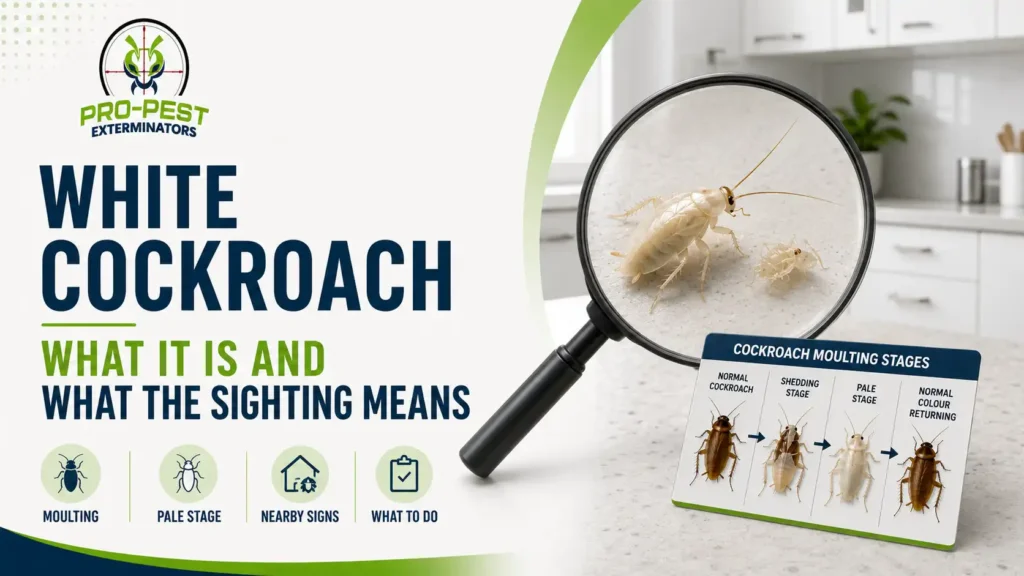
Pale nymphs can appear near a recently opened egg case. Their light colour does not represent a separate species because a white cockroach has usually completed a recent moult and has not developed its normal colour.
Cockroach Poop on a Bed or Mattress
Cockroach poop on a bed can indicate movement through the bedroom or a nearby hiding area. Brown-banded cockroaches deserve attention because they occupy bedrooms, closets, furniture and upper wall areas.
Inspect these locations:
- Mattress seams and labels
- Bed-frame joints
- The underside of the headboard
- Bedside drawers
- Upholstered furniture
- Picture frames
- Closets and upper shelves
- Electrical devices near the bed
Black marks on a mattress can also come from bed bugs. Bed bug fecal spots contain digested blood and can release a rusty-red colour when touched with a damp white tissue.
Cockroach fecal material does not produce the same blood-coloured reaction. Physical evidence such as live insects, cast skins or eggs must still support the final identification.
Do not treat unexplained skin marks as proof that a cockroach crossed the bed. The appearance of a suspected cockroach bite cannot identify the pest because bed bugs, mosquitoes, fleas and skin irritation can produce similar redness.
What the Droppings Reveal About the Infestation
One pellet confirms that a cockroach used the area at some point. It does not show the current population size or prove that the activity continues.
Fresh marks that return after cleaning provide stronger evidence of an active problem. Several clusters around one cabinet or appliance point towards a nearby hiding area.
The following evidence strengthens the diagnosis:
- New spots appearing after cleanup
- Several pellets in one protected location
- Adults and small nymphs together
- Egg cases near the deposits
- Shed skins inside the same gap
- Cockroaches caught on sticky monitors
- Repeated activity after dark
Droppings, egg cases and nymphs found together indicate that the area supports more than occasional movement. This combination deserves a wider inspection of connected cabinets, appliances and wall gaps.
A single pellet cannot identify the exact species. Distribution matters because kitchen clusters, drain-side pellets and bedroom spots point towards different cockroach behaviours.
Health Risks Associated With Cockroach Waste
Cockroach feces contain proteins that can trigger allergies and asthma symptoms in sensitive people. Shed skins, saliva and body fragments add more allergens to indoor dust.
The US Environmental Protection Agency identifies cockroach feces and saliva as indoor allergen sources. Children and people with asthma or existing allergies face greater concern from repeated exposure.
Possible allergy symptoms include:
- Sneezing
- Nasal congestion
- Watery or irritated eyes
- Coughing
- Wheezing
- Asthma symptoms
- Itchy skin or hives
These symptoms do not confirm a cockroach infestation by themselves. Physical evidence inside the property must support the pest identification.
Cockroaches can also contaminate food-contact surfaces after travelling through waste, drains and unsanitary areas. Discard uncovered food found beside droppings.
How to Clean Cockroach Poop Safely
Wear disposable gloves and keep children and pets away during cleanup. People with asthma or severe allergies should leave the area during vacuuming.
Follow these steps:
- Remove exposed food, utensils and pet bowls.
- Photograph uncertain specimens before cleaning.
- Use a HEPA-filter vacuum to collect loose particles and cast skins.
- Seal and discard the vacuum contents.
- Wash hard surfaces with warm soapy water.
- Rinse the cleaned surface with clean water.
- Dry the area completely.
- Launder washable bedding according to its care label.
- Discard contaminated food and damaged packaging.
- Wash your hands after removing the gloves.
The EPA recommends HEPA-filter vacuuming because it reduces the release of fine allergen particles. Ordinary dry sweeping can move these particles into the air.
Texas A&M recommends washing hard surfaces with soapy water and then rinsing them. This process removes allergen residue and cockroach aggregation chemicals.
Cleaning removes visible waste and allergens. It does not reach cockroaches hiding inside cabinet gaps, appliances, furniture, drains or wall openings.
What to Do When Droppings Return
Clean the area and inspect it again during the following days. New deposits confirm that cockroaches continue to use the location.
Place sticky monitors near the heaviest deposits. Position each trap against a wall, cabinet edge or appliance because cockroaches usually travel along protected boundaries.
Remove crumbs, grease and exposed food. Repair plumbing leaks and dry wet cabinet bases.
Seal accessible gaps around pipes, cabinets and walls after identifying the main movement routes. Avoid sealing an active hiding space without addressing the insects inside it.
Recurring kitchen specks often indicate an indoor German cockroach population. Large pellets around drains point towards larger species and plumbing-related movement.
Professional cockroach control services should inspect the droppings, species, harbourages and entry routes before selecting gel bait, crack treatment or drain-line treatment.
Treatment scope depends on the affected rooms, active species and number of harbourages. These factors also determine the final cockroach control cost more accurately than the number of visible droppings.
Pro-Pest Exterminators inspects cabinets, appliances, drains and connected hiding areas across Karachi properties when droppings return after cleanup.
Frequently Asked Questions
What does cockroach poop look like?
Cockroach poop looks like dark pepper-sized specks, coffee-ground particles, stained spots or solid cylindrical pellets. Small species produce fine particles, and large species leave visible pellets with blunt ends and lengthwise ridges.
The discovery location adds important context. Kitchen-cabinet specks often point towards German cockroaches, and larger pellets near drains suggest a larger species. Colour alone cannot confirm the source because several pests produce brown or black waste.
Does cockroach poop mean there is an infestation?
Cockroach poop means that at least one cockroach used the area. A single old pellet cannot confirm the current population size or prove that cockroaches remain active.
New marks appearing after cleanup provide stronger evidence of ongoing activity. Droppings found with nymphs, egg cases, shed skins or repeated trap catches indicate an established harbourage nearby.
How can I tell whether cockroach droppings are fresh or old?
Cockroach droppings cannot receive a reliable age based on colour alone. Moisture, cleaning products, surface type and dust can change their appearance.
Clean and photograph the area, then monitor it for several days. New deposits in the same location confirm current activity more reliably than judging the texture or shade of an existing mark.
Why do cockroach droppings keep appearing in the same place?
Cockroach droppings keep appearing in the same place because cockroaches regularly use that location as a hiding area, feeding point or travel route. Fecal deposits also contain aggregation chemicals that encourage cockroaches to gather near the same harbourage.
Check the nearest cracks, cabinet hinges, appliance gaps, plumbing openings and wall edges. A sticky monitor placed against the closest boundary can confirm the active route.
Can cockroach poop make a person sick?
Cockroach poop can affect health because it contains allergenic proteins. These proteins can contribute to sneezing, coughing, wheezing and asthma symptoms in sensitive people.
Fecal material can also contaminate nearby food and food-contact surfaces. Remove exposed food, clean the surface thoroughly and reduce continued exposure by addressing the infestation source.
Can cockroach poop appear on walls and ceilings?
Cockroach poop can appear on walls, ceilings, cabinet sides and other vertical surfaces near hiding areas. Small species often leave dark spots or smears along corners and narrow structural joints.
Marks in high, warm and dry areas can support suspicion of brown-banded cockroaches. Inspect picture frames, cupboards, furniture, electrical fixtures and upper wall gaps for additional evidence.
What should I do if I find cockroach poop in a kitchen cabinet?
Cockroach poop inside a kitchen cabinet requires food removal, careful cleaning and inspection of the surrounding joints. Discard exposed food and damaged packaging before washing and drying the cabinet.
Check hinges, shelf holes, drawer runners and nearby appliance gaps. Place a sticky monitor against the rear cabinet edge to confirm whether cockroaches remain active.
Does cleaning cockroach poop get rid of cockroaches?
Cleaning cockroach poop does not get rid of cockroaches hiding inside cracks, appliances, cabinets, furniture or drains. Cleaning removes fecal residue, allergens and aggregation chemicals from the treated surface.
Long-term control also requires food removal, moisture correction, monitoring and species-appropriate treatment. Returning deposits show that the active harbourage or entry route still requires attention.