Why Trust Our Services:
Why Professional Beehive and Wasp Nest Removal Matters
Bee and wasp activity needs closer attention when insects establish a nest near entrances, balconies, roofs, gardens, work areas, or other places people regularly use.
The visible activity does not always reveal the actual nesting location. Bees can establish colonies inside protected structural spaces, and wasps may use sheltered openings, roof areas, trees, eaves, or exterior structures.
Spraying, striking, burning, flooding, or blocking an active nesting point can disturb the insects and increase exposure to stings. Nest locations at height can also create an additional safety risk for anyone attempting removal without suitable equipment.
A professional inspection determines what insect is present, where the activity originates, how technicians can reach the nest, and which removal method fits the property conditions.
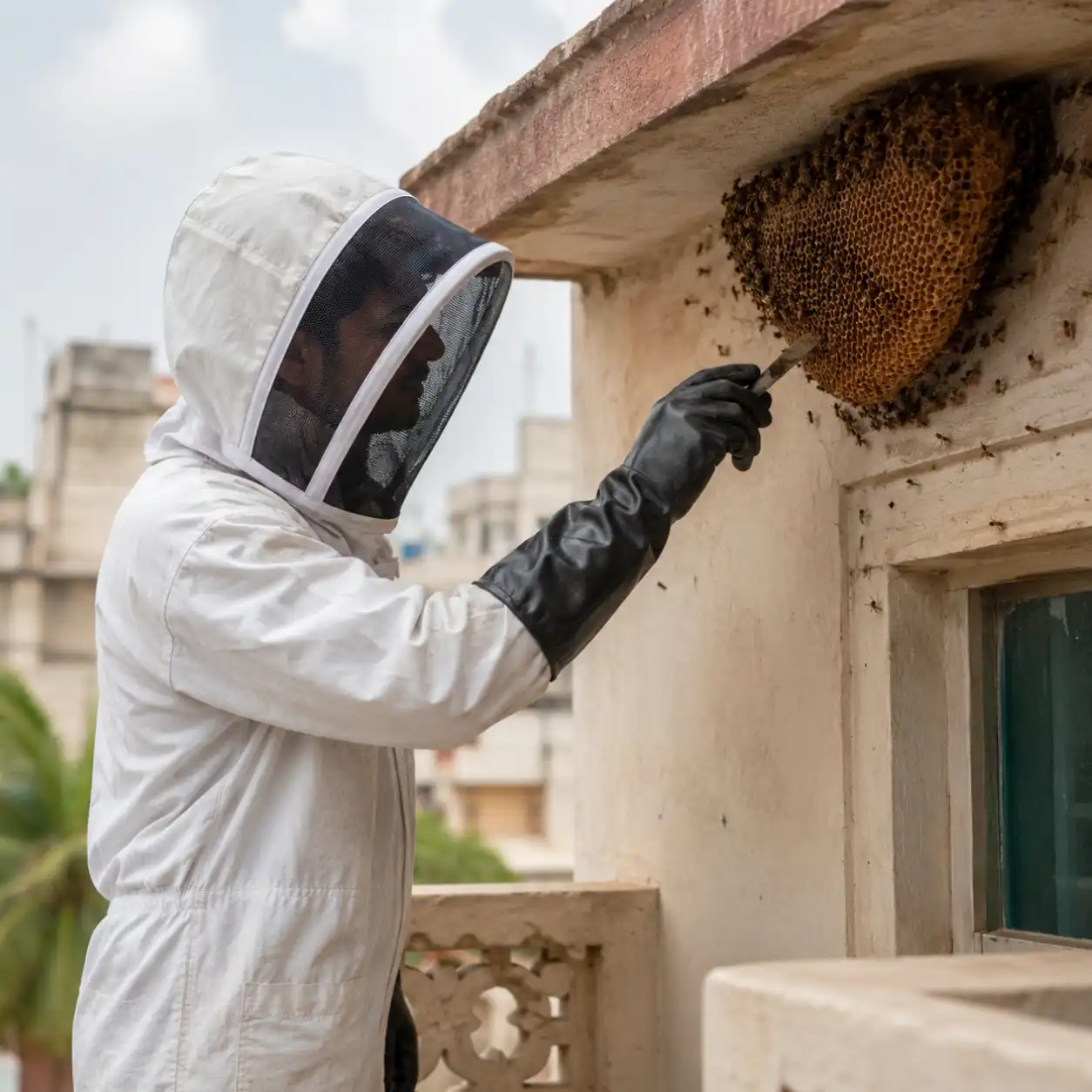
Repeated insect activity around one part of a property can help identify an established nesting point even when the full nest remains hidden.
Signs of Active Nest Activity
Common Nest Locations
A small opening may only serve as the entrance to a concealed nesting area. Avoid sealing an active entry point until a technician has assessed the insect activity and nest location.
The location and structure of a nest affect how technicians approach the problem. Some nests remain completely visible, while others develop inside protected areas of a building.
Exposed Nests
Bees and wasps may establish activity around trees, balconies, roof edges, eaves, sheds, canopies, or other outdoor structures.
These nests may appear easy to reach, yet approaching an active colony can trigger defensive behavior. Height and surrounding access also need consideration during removal.
Concealed Nesting Areas
Repeated insects entering one gap in a roof, wall, ceiling, or exterior structure can indicate activity inside the building.
The opening visible outside may only provide access to the nesting area. Closing that opening while insects remain active can interfere with their normal exit route.
Temporary Bee Swarms
A large cluster of bees resting on a tree, wall, fence, or another surface does not always mean a permanent hive has developed.
The bees may still require professional assessment so the colony can be identified and an appropriate handling method can be selected without unnecessary disturbance.
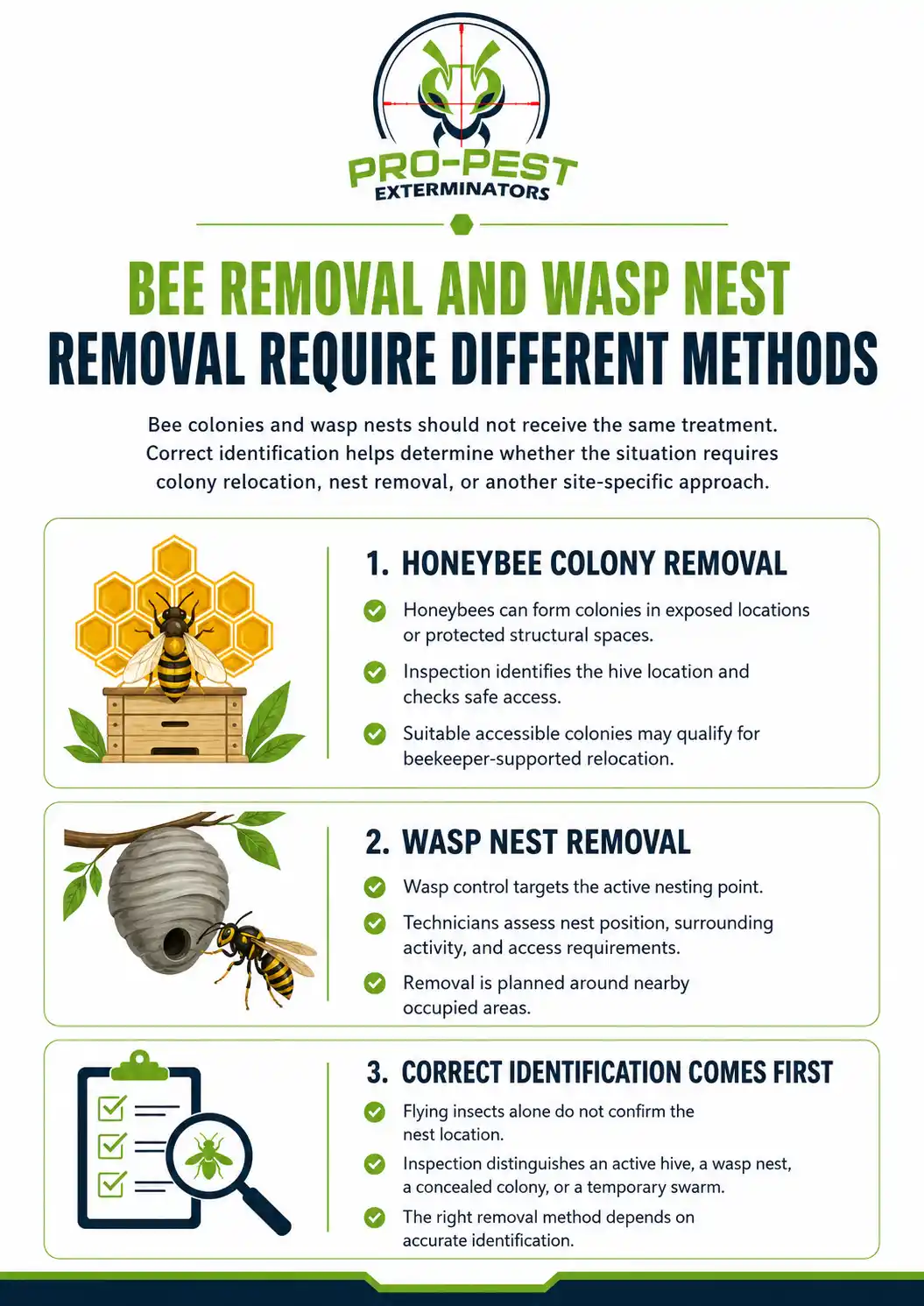
Bee Removal and Wasp Nest Removal Require Different Methods
Bee colonies and wasp nests should not receive the same treatment. Correct identification helps determine whether the situation requires colony relocation, nest removal, or another site-specific approach.
Honeybee Colony Removal
Honeybees can form colonies in exposed locations or protected structural spaces. The technician first identifies the hive location and checks whether the colony can be accessed safely.
Suitable and accessible honeybee colonies may qualify for beekeeper-supported relocation depending on the property conditions and position of the hive.
Wasp Nest Removal
Wasp control focuses on locating the active nesting point rather than treating individual wasps flying around the property.
The technician assesses nest position, surrounding activity, access requirements, and nearby occupied areas before carrying out removal.
Correct Identification Comes First
Flying insects around a property do not automatically confirm where the nest sits or what species has established it.
The inspection helps distinguish an active hive, wasp nest, concealed colony, or temporary bee swarm before the removal method is selected.
Our Approach to Bee and Wasp Nest Removal
Each service follows a clear site-based process that helps our technicians identify the nest, control access, complete removal, and check the affected area.
How to Prepare Your Property for Beehive and Wasp Nest Removal Service
Keeping the immediate area controlled helps reduce unnecessary contact with an active nest before the technician arrives.
What To Do:
What Not To Do:
The technician can assess the site once access around the nest is clear, and occupants know which area to avoid during the service.
Residential and Commercial Bee and Wasp Removal in Karachi
Bee and wasp nesting risks vary by property type. Pro-Pest Exterminators assesses access, occupied areas, and site conditions before planning removal for homes, businesses, and industrial facilities.
Residential Bee and Wasp Removal
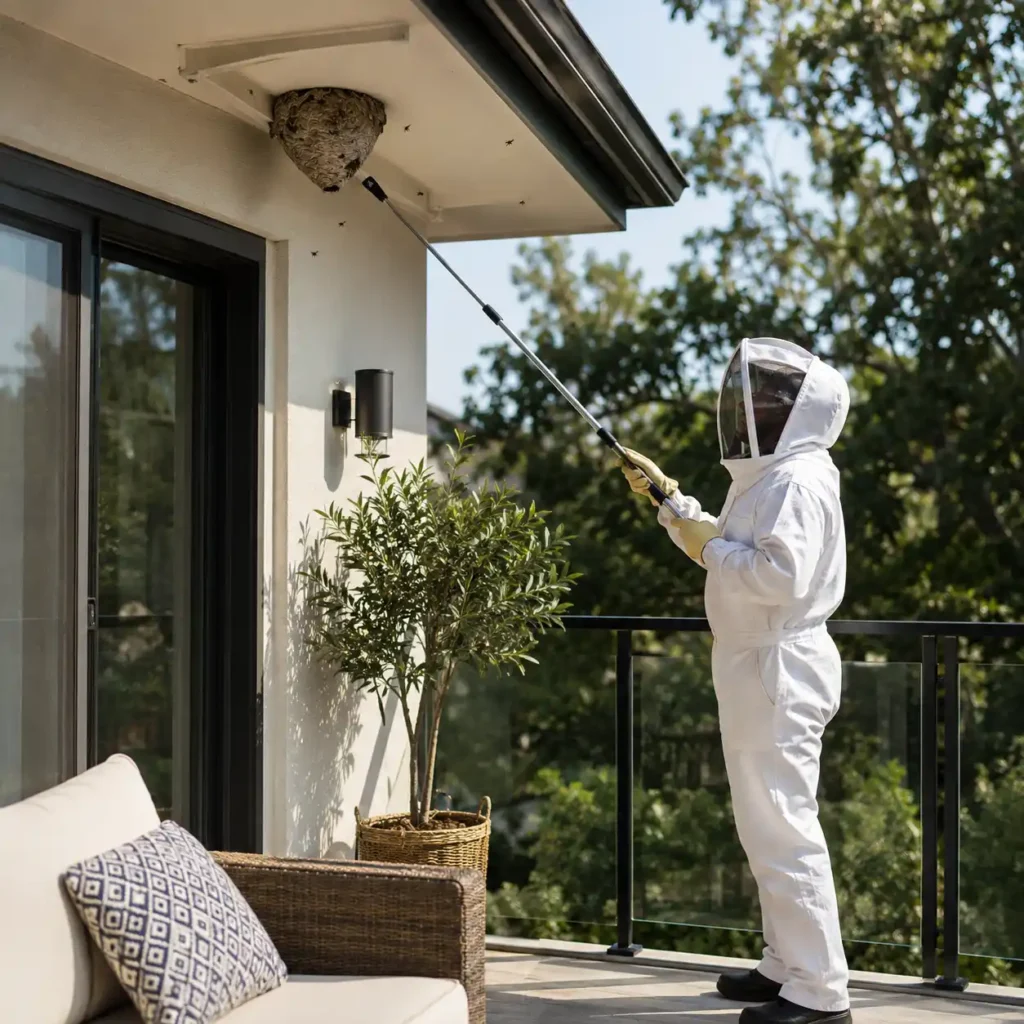
Bee and wasp nests can develop around balconies, roofs, gardens, wall openings, exterior structures, trees, and other sheltered areas of a home. Our technicians assess the nesting point and plan the service around family access, children, pets, entrances, and neighboring areas.
Commercial and Industrial Nest Removal
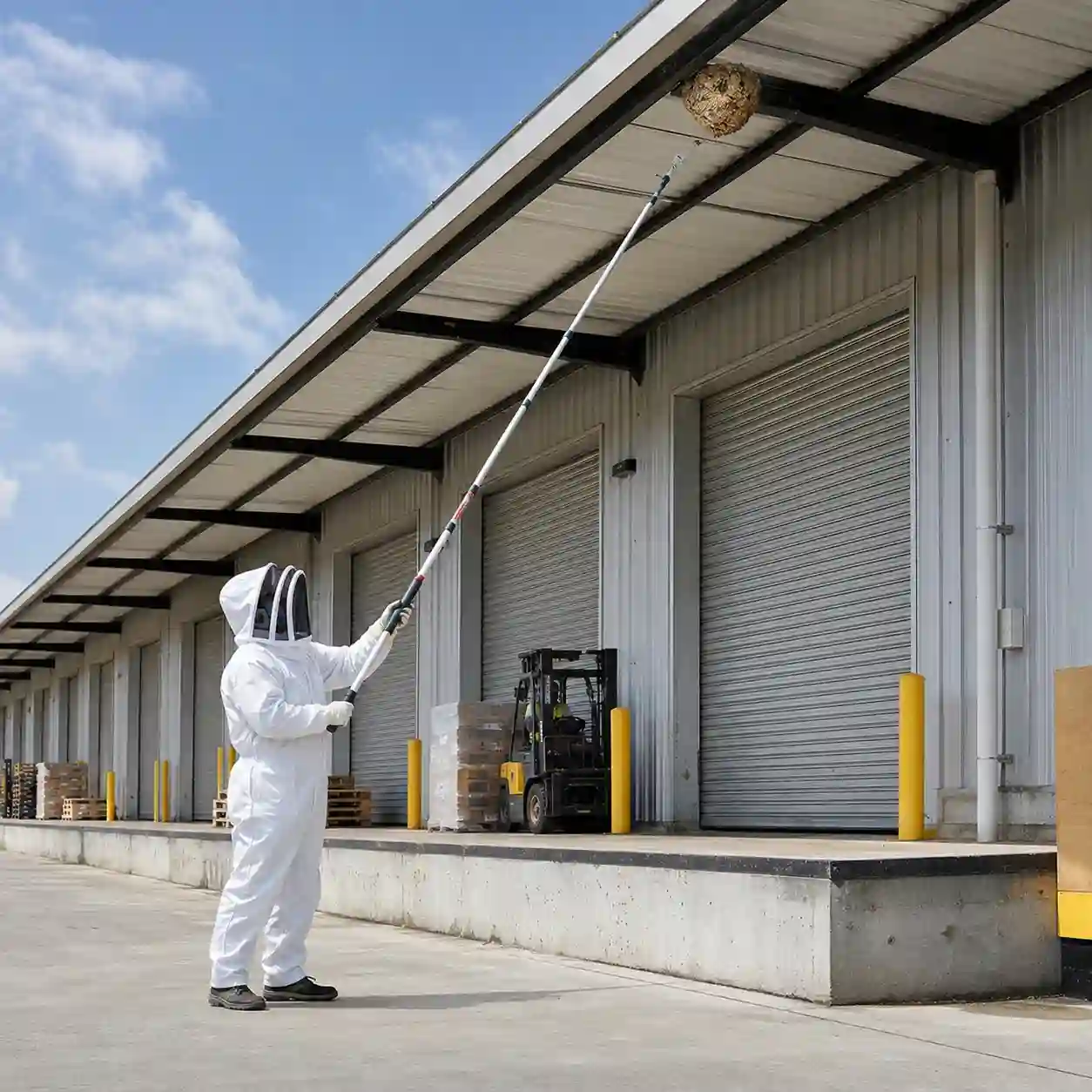
Nests near entrances, staff areas, customer spaces, loading zones, warehouses, workshops, or outdoor facilities can interfere with normal property use. Pro-Pest Exterminators assesses the active area, site access, and operating conditions before planning removal for commercial or industrial properties.
Why Property Owners Choose Pro Pest for Beehive and Wasp Nest Removal
Pro-Pest Exterminators follows an inspection-led approach so the technician can identify the insect, locate the nesting area, and assess access conditions before recommending removal.
Testimonials


Areas We Serve for Bee and Wasp Removal in Karachi
Pro-Pest Exterminators provides beehive and wasp nest removal services across major residential, commercial, and industrial areas of Karachi. Contact the team to confirm service availability for your specific property.
Other Services We Provide Across Karachi
Need help with another infestation? Explore our dedicated pest control services for common Karachi property problems, each with inspection-led treatment matched to the pest and site conditions.