Quick Answer
Household cockroaches can bite or gnaw human skin, though this happens rarely. A suspected cockroach bite may cause a small area of redness, irritation or swelling. These reactions also occur with other insects and skin conditions, so the mark cannot identify the pest that caused it.
An unexplained red or itchy mark can raise concerns when cockroaches have also appeared inside the property. The timing of the mark, symptoms elsewhere on the body and physical evidence around the room provide more useful information than the mark alone.
- Do Cockroaches Bite Humans?
- What Does a Cockroach Bite Look Like?
- Suspected Bite and Cockroach Allergy Are Different Concerns
- Other Causes of an Unexplained Skin Mark
- Property Signs to Check
- What to Do With a Suspected Cockroach Bite
- When to Seek Medical Advice
- When the Property Needs a Cockroach Inspection
- Frequently Asked Questions
Do Cockroaches Bite Humans?
Cockroaches have chewing mouthparts and can damage human skin under unusual conditions. They do not depend on blood for food and generally avoid direct contact with people.
The National Pesticide Information Center states that cockroaches do not usually bite. Their more common health effects come through allergens in shed skin and waste.
Household bites remain uncommon
A cockroach inside a kitchen or bathroom does not mean that anyone in the property will be bitten. Most indoor cockroaches find food through crumbs, grease, waste and other organic material.
Reports of direct skin contact usually involve unusually high cockroach numbers or limited access to normal food. Historical entomology records describe cockroaches gnawing fingernails, eyelashes and callused skin under extreme conditions.
Contact may occur while a person sleeps
Cockroaches usually search for food during the night. A sleeping person remains still for a long period, which can make accidental contact more possible.
Food residue around the hands or face may also attract foraging insects. This possibility does not confirm that a mark discovered in the morning came from a cockroach.
Cockroaches do not sting
Cockroaches have no stinger. Their mouthparts allow them to chew food and organic material.
A person who feels a sharp sting should consider other insects or causes. The surrounding property evidence can help narrow the possibilities.
What Does a Cockroach Bite Look Like?
A suspected cockroach bite may appear as a small red, raised or irritated area. Mild itching, tenderness or swelling may occur around the mark.
No recognised skin pattern can confirm a cockroach as the cause. Mosquito bites, bed bug bites, fleas, mites, hives and contact irritation can produce a similar appearance.
A skin mark cannot identify the pest
The skin responds to injury and inflammation through a limited number of visible reactions. Redness, itching and swelling appear across many insect bites and dermatological conditions.
The size of a mark also depends on the person’s immune response, scratching and time since the reaction began. Exact measurements published on pest-control websites do not provide a reliable identification method.
A photograph has limited diagnostic value
A clear photograph can record how the mark changes over time. It may help a healthcare professional assess redness, swelling or signs of infection.
The photograph cannot establish which insect caused the mark. Direct observation of the pest or supporting evidence around the property provides a stronger basis for identification.
Cockroach colour does not change the contact risk
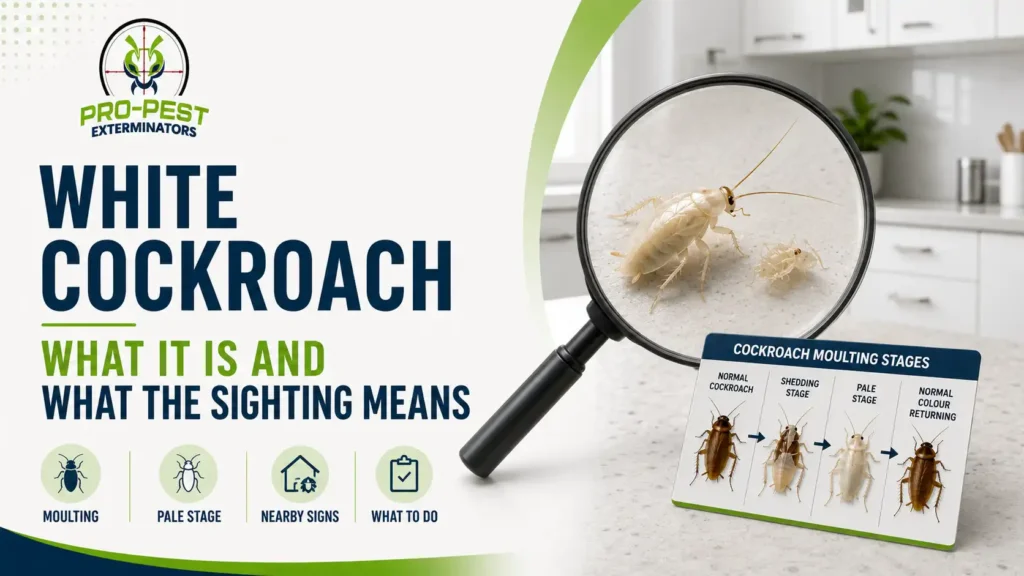
Brown, dark or recently moulted cockroaches have the same basic mouthparts. A cockroach in its temporary pale stage after moulting does not represent a separate biting species.
Species, population level and access to normal food sources carry more relevance than temporary colour.
Suspected Bite and Cockroach Allergy Are Different Concerns
A suspected bite involves local contact with the skin. Cockroach allergy develops when the immune system reacts to proteins in droppings, saliva, shed skins or body fragments.
A person can experience a cockroach allergy without any cockroach touching or biting them. Allergens may collect in dust and spread through occupied rooms.
| Sign or circumstance | Suspected bite or skin injury | Cockroach allergy |
|---|---|---|
| Main area affected | Usually one local area of skin | Skin, nose, eyes or airways |
| Possible skin response | Redness, itching, tenderness or swelling | Itchy rash or hives |
| Other symptoms | Usually limited to the affected area | Sneezing, congestion, coughing or watery eyes |
| Breathing symptoms | Require urgent medical assessment | Allergy may aggravate asthma |
| Evidence needed | Direct contact or strong pest evidence nearby | Symptoms, exposure history and medical testing |
| Can appearance confirm it? | No | No |
Cleveland Clinic lists skin rash, sneezing, coughing, congestion and itchy or watery eyes among the symptoms associated with cockroach allergy. A healthcare provider may use allergy testing to establish the cause.
A local mark differs from a wider allergic response
A single irritated area may follow an insect bite, scratching or contact with another substance. Allergy symptoms often affect more than one body system.
Sneezing, nasal congestion, itchy eyes or recurring breathing symptoms point towards allergen exposure. A doctor or qualified allergy specialist should assess persistent or recurrent symptoms.
Cockroach allergens can remain after the insect has moved
Shed skins, droppings and body fragments can remain inside cabinets, appliance gaps and dust. Cleaning or disturbing these areas may move allergen particles into the surrounding air.
Removing visible cockroaches alone may not immediately remove accumulated allergens. Careful cleaning and control of the active infestation both matter.
Other Causes of an Unexplained Skin Mark
Several pests and skin conditions can produce red or itchy marks. The appearance of the skin should be assessed alongside the room, time of onset and other symptoms.
Bed bug activity
Bed bugs feed on blood and stay close to sleeping areas. Their physical signs may include dark spotting, shed skins, eggs or live insects around mattress seams, headboards and furniture joints.
Marks appearing after sleep carry more meaning when these signs are also present. Evidence around the bed may justify an inspection for bed bug activity in the sleeping area.
Mosquitoes and other biting insects
Mosquitoes can enter through open windows, doors and damaged screens. Fleas may occur around pets, carpets and upholstered areas.
Mites and other small arthropods can also produce irritation. Each pest leaves different environmental evidence, so the room inspection matters more than the skin pattern.
Hives and contact irritation
Hives can cause raised, itchy areas that change position or appear across different parts of the body. Cleaning products, cosmetics, fabrics and other substances can also irritate the skin.
A healthcare professional should assess persistent, spreading or unexplained reactions. Pest evidence should support any property-level conclusion.
Property Signs to Check
The presence of cockroaches near the affected room increases the need for inspection. It still does not prove that a cockroach caused the mark.
Check for several signs in the same area:
- Live cockroaches seen at night
- Dark droppings around cabinet corners or hinges
- Brown egg cases called oothecae
- Shed exoskeletons
- Activity around sinks, drains or plumbing gaps
- Cockroaches behind refrigerators or cooking appliances
- Repeated sightings over several nights
- Different cockroach sizes in the same area
Check the room where the mark appeared
Start with the room where the person slept or noticed the irritation. Look along wall edges, furniture gaps and nearby storage.
In a bedroom, inspect the mattress and bed frame for bed bug evidence as well. Cockroaches commonly stay closer to food, moisture and protected appliance spaces, though they can move into other rooms.
Check kitchens and bathrooms
Kitchen cabinets, appliance motors, sink plumbing and food-storage areas provide common cockroach harbourages. Bathrooms can provide moisture and access through plumbing openings.
Karachi apartments may also contain shared service ducts and pipe routes between units. Activity in one room can connect with concealed movement elsewhere in the building.
Record evidence before cleaning the area
Photograph live insects, droppings, egg cases or shed skins when practical. Record the location and time of each sighting.
This evidence helps distinguish isolated activity from a recurring pattern. It also gives the inspector more useful information than a skin photograph alone.
What to Do With a Suspected Cockroach Bite
Treat the skin concern and property concern as separate tasks. Basic skin care can protect the affected area, while an inspection can establish whether cockroach activity exists nearby.
Wash the affected skin
Wash the area gently with soap and clean water. Pat the skin dry and avoid vigorous rubbing.
General NHS guidance recommends cleaning insect bites with soap and water. A cold compress can help with swelling or discomfort.
Use a cold compress
Place a clean cloth around a cold pack and apply it for a short period. Avoid placing ice directly against the skin.
A pharmacist or doctor can advise on suitable treatments for itching or swelling. Children, pregnant people and anyone with existing medical conditions may require specific guidance.
Avoid scratching
Scratching can damage the skin and increase the chance of a secondary infection. Keep fingernails clean and monitor the affected area.
Seek medical advice if redness, pain or swelling continues to increase.
Monitor changes
Take a photograph in consistent lighting and note when the mark first appeared. Check whether the area becomes larger, warmer, more painful or begins to discharge fluid.
Also record any fever, breathing symptoms, facial swelling or widespread rash. These symptoms carry more medical significance than the suspected pest identity.
When to Seek Medical Advice
Most minor insect bites improve within a few days. Increasing inflammation, infection signs or a serious allergic reaction require medical assessment. (Source: NHS)
Seek urgent medical help for a serious reaction
Obtain urgent medical help if the person develops:
- Difficulty breathing
- Swelling of the lips, face, eyelids or throat
- Dizziness, fainting or loss of consciousness
- Widespread hives
- A weak or rapid pulse
- Repeated vomiting or diarrhoea alongside other allergy symptoms
Mayo Clinic lists these symptoms among the warning signs of a severe allergic reaction following an insect bite or sting.
Seek medical assessment for possible infection
Contact a healthcare professional if the affected area becomes increasingly red, swollen, hot or painful. Pus, red streaks, swollen glands or flu-like symptoms can indicate infection.
Cambridge University Hospitals recommends medical assessment when these infection signs develop after an insect bite or sting.
Get advice when the cause remains unclear
A doctor can assess the skin reaction and determine whether it requires treatment. An allergist may help when symptoms suggest recurring cockroach allergy.
A pest inspection serves a different purpose. It identifies activity inside the property and does not provide a medical diagnosis.
When the Property Needs a Cockroach Inspection
Arrange an inspection when physical evidence confirms recurring cockroach activity. The need becomes stronger when several signs appear in kitchens, bathrooms or sleeping areas.
Repeated sightings, nymphs, droppings and egg cases may indicate an established infestation. Professional cockroach control should target the active species, harbourages and entry routes found during inspection.
Skin marks alone should not determine the treatment plan. Property evidence should guide the pest-control decision.
Pro-Pest Exterminators inspects cockroach activity in Karachi homes and commercial properties when recurring sightings or infestation signs appear.
Frequently Asked Questions
Do cockroaches bite humans while sleeping?
Cockroaches can make contact with sleeping people, although bites remain uncommon. Reports usually involve high cockroach activity or unusual conditions. A mark discovered after sleep cannot confirm a cockroach without supporting evidence nearby.
What does a cockroach bite look like?
A suspected bite may appear red, raised, itchy or slightly swollen. Mosquitoes, bed bugs, fleas and skin reactions can produce the same features. No specific shape, size or pattern confirms a cockroach bite.
How can I tell a cockroach bite from a bed bug bite?
The skin marks may look similar, so the room provides better evidence. Bed bugs usually leave signs around mattresses, bed frames and nearby furniture. Cockroaches more often leave droppings, egg cases and shed skins near food, moisture and concealed gaps.
Can cockroach allergy cause a skin rash?
Cockroach allergy can cause an itchy skin rash in some people. It may also cause sneezing, congestion, coughing or watery eyes. A healthcare provider can evaluate recurring symptoms and arrange allergy testing where appropriate.
Are cockroach bites poisonous?
Cockroaches have no venom and do not sting. A skin break can still become irritated or infected, especially after scratching. Increasing pain, heat, redness, swelling or discharge requires medical assessment.
Can a cockroach bite kill you?
A cockroach bite itself is not expected to cause a fatal outcome. Any person who develops breathing difficulty, facial or throat swelling, fainting or widespread hives needs urgent medical help because these symptoms can indicate a serious allergic reaction.
How long does a suspected cockroach bite last?
Minor insect-bite reactions often improve within a few days. The duration depends on the cause and the person’s skin response. Seek medical advice when the mark worsens, spreads, becomes infected or fails to improve.