Quick Answer
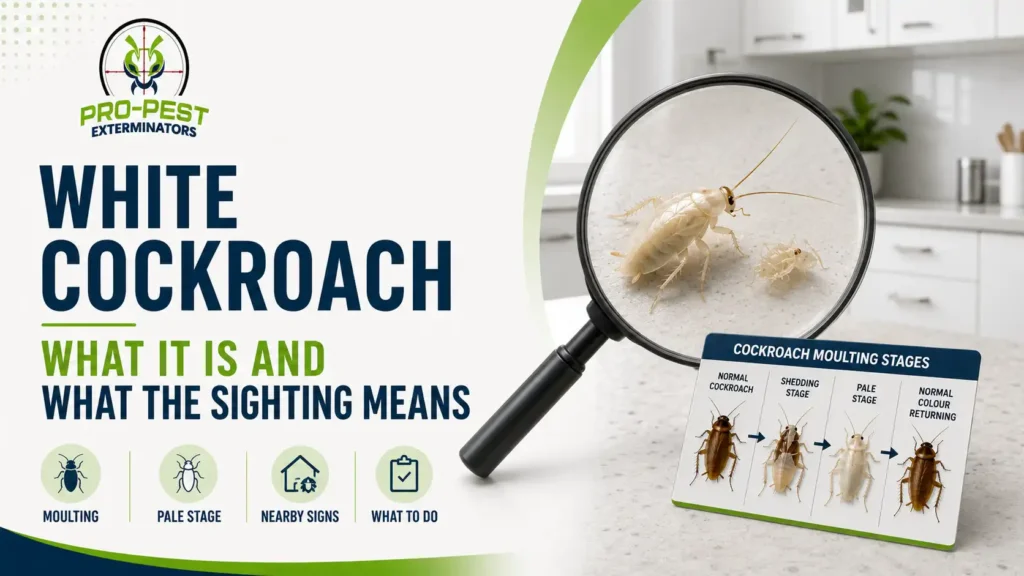
A white cockroach is usually a cockroach that has recently moulted. Its new exoskeleton initially appears pale and develops its normal colour as it hardens. Finding one suggests nearby cockroach activity, although a single sighting cannot determine the size of an infestation.
Finding a white cockroach in a kitchen, bathroom or cabinet can be confusing because its colour makes it look like a different species. The location of the sighting and any shed skins, droppings or egg cases nearby help determine whether wider cockroach activity may be present.
What Is a White Cockroach?
A white cockroach is a cockroach in the temporary pale stage that follows moulting. German, American and other cockroach species can pass through this stage, while body size, markings, wings and sighting location provide the details needed for species identification.
A recently moulted cockroach
Cockroaches have a hard external covering called an exoskeleton. The exoskeleton protects the body, although it cannot expand continuously as the insect grows.
A developing cockroach must shed this covering and form a larger one. The new cuticle underneath appears soft, pale and sometimes almost transparent at first.
Newly moulted nymphs and adults can appear completely white before their cuticles develop their usual hardness and colour. The University of California Riverside documents this temporary appearance in cockroach colonies.
Why it is mistaken for an albino cockroach
People often use the term albino cockroach when they see a pale specimen. True albinism involves a lasting absence of normal pigmentation. Moulting produces a temporary colour change.
The cockroach gradually develops the markings and colour associated with its species. Its pale appearance alone cannot identify whether it is a German, American or another cockroach.
A pale cockroach and shed skin are different
A recently moulted cockroach has a complete body, visible legs and antennae. It may move slowly because its new outer covering remains soft.
A shed exoskeleton looks dry, hollow and stationary. It may retain the insect’s shape, which makes it easy to mistake for a dead or pale cockroach.
Finding shed skin shows that a cockroach developed in or near that area. The skin alone cannot determine how many cockroaches are present.
Are white cockroaches rare?
The moulting stage forms a normal part of cockroach development. People rarely observe the pale appearance because it lasts for a limited period and commonly occurs inside protected spaces.
Cockroaches remain vulnerable until the new cuticle hardens. Cracks, cabinet joints, appliance gaps and similar hiding places give them protection during this stage.
How Moulting Produces the White Appearance
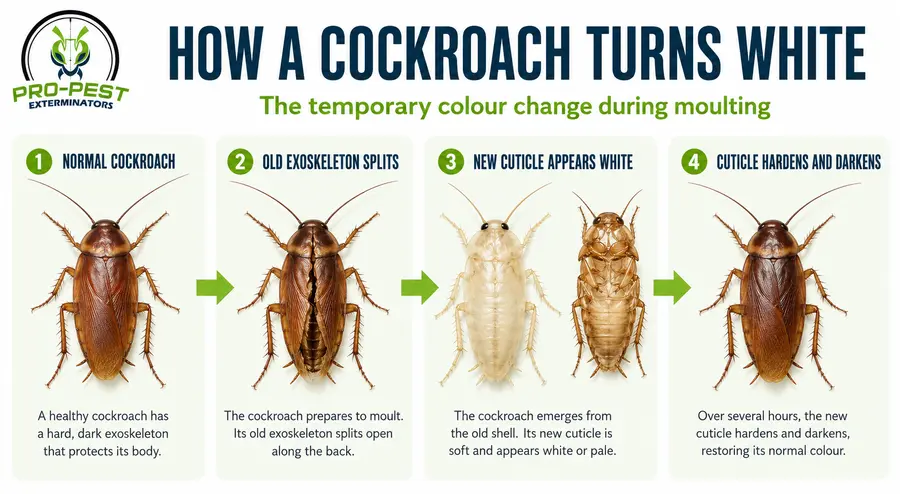
Moulting allows a cockroach to grow beyond the limits of its existing exoskeleton. The process exposes a new cuticle that has not yet developed its final texture, hardness or colour.
The old exoskeleton separates
The cockroach develops a new cuticle underneath its existing outer covering. The old exoskeleton then splits, allowing the insect to pull its body and legs free.
Entomologists call the shedding stage ecdysis. This stage occurs several times during a cockroach’s development as a nymph grows towards adulthood.
The new cuticle starts soft and pale
The fresh cuticle provides little protection immediately after moulting. Its soft structure and pale appearance can make the cockroach look unfamiliar.
The insect may also move less effectively during this period. A protected harbourage reduces its exposure to injury and other threats while the cuticle matures.
The cuticle hardens and darkens
The new cuticle gradually gains strength and develops its normal colour. Entomologists call this hardening process sclerotization.
NC State University describes sclerotization as the process through which an insect’s cuticle hardens and darkens. This process gives the exoskeleton its final texture and appearance.
How long the pale stage lasts
The colour change generally occurs within a short period. The exact duration can vary according to the cockroach species, life stage and surrounding conditions.
Virginia Tech reports that recently moulted American cockroaches become hard and dark within a few hours. This timeframe provides a useful reference, although it should not serve as a fixed timer for every species.
What a White Cockroach Sighting Can Indicate
The sighting confirms that the cockroach recently completed a moult. It may also suggest that a protected resting area exists nearby. Other evidence must establish whether the property contains wider or recurring activity.
The moulting location may be nearby
Cockroaches commonly use concealed areas while their new cuticles remain soft. A pale cockroach found in the open may have recently emerged from a nearby gap or disturbed hiding place.
The colour cannot reveal the exact harbourage. The room, immediate location and other signs provide more useful evidence.
One sighting cannot measure the infestation
A single sighting does not show how many cockroaches live inside the property. It also cannot confirm the species, length of activity or location of a colony.
Repeated sightings provide stronger evidence. Droppings, egg cases, shed skins and cockroaches of different sizes also help establish the extent of the activity.
The location provides additional context
The place where the cockroach appears can guide a focused inspection.
| Sighting location | Areas worth checking |
|---|---|
| Kitchen cabinet | Hinges, joints, drawer runners and food residue |
| Refrigerator or cooker | Motor areas, warm gaps and hidden edges |
| Under the kitchen sink | Plumbing openings, moisture and cabinet corners |
| Bathroom | Pipe gaps, service ducts and damp areas |
| Drain area | Drain covers, plumbing routes and nearby openings |
| Open room | Wall edges, furniture gaps and disturbed storage |
Shared plumbing, service ducts and closely connected kitchens can create several concealed routes in Karachi apartment buildings. These property features affect where cockroaches move and hide. They do not change the biological reason for the pale appearance.
Signs That Show Wider Cockroach Activity
One observation rarely provides a complete picture. Several signs found in the same area give a clearer indication of recurring or established cockroach activity.
Shed skins
Cockroaches may leave old exoskeletons inside cabinets, behind appliances or near narrow hiding places. Repeated findings suggest that developing cockroaches continue to use the area.
A single shed skin confirms previous activity at some point. It cannot establish whether the cockroach remains nearby.
Droppings and dark spotting
Cockroach droppings can collect around cabinet corners, hinges, appliance gaps and concealed edges. Their appearance varies with the cockroach’s size and species.
Several marks within an active hiding area carry more significance than one unidentified dark spot. The location and pattern should support the identification.
Egg cases
A cockroach egg case is called an ootheca. Its size, shape and colour depend on the species.
An egg case can indicate reproductive activity within or near the property. A professional inspection may still be necessary to identify the species and determine whether the case remains active.
Cockroaches of different sizes
Several cockroaches at different developmental stages provide stronger evidence of an active population. Small nymphs usually remain closer to protected harbourages than larger adults.
Repeated sightings in the same kitchen, bathroom or appliance area also deserve attention. They show a pattern that one isolated observation cannot provide.
Repeated visible activity
Cockroaches usually remain concealed during much of the day. One daytime sighting can result from disturbance or movement between hiding places.
Regular daytime or nighttime sightings carry greater diagnostic value. Frequency, location and accompanying signs should guide the next decision.
| Evidence found | Reasonable interpretation |
|---|---|
| One pale cockroach only | Recent moulting; population size remains unknown |
| Pale cockroach with shed skin | Moulting likely occurred nearby |
| Droppings in the same area | Recurring activity becomes more likely |
| Egg case or several nymphs | Reproductive activity may exist nearby |
| Different sizes on multiple dates | An established population becomes more likely |
| Activity in several rooms | The affected area may extend beyond one harbourage |
What to Do After Finding a Pale Cockroach
The next step depends on the location, frequency and evidence surrounding the sighting. A short inspection can help distinguish an isolated observation from recurring activity.
Record the sighting
Note the room, exact location and time. Take a clear photograph if the insect remains visible.
A photograph can help distinguish a recently moulted cockroach from shed skin or another pale insect. It may also preserve body features that support later species identification.
Check the immediate area
Inspect cabinet joints, appliance gaps, plumbing openings, wall edges and nearby moisture points. Focus on the area surrounding the sighting.
Look for droppings, egg cases and additional shed skins. Avoid dismantling electrical appliances or entering unsafe service spaces during the inspection.
Monitor for additional evidence
Watch the same area over the following days. Record any repeated sightings and note whether the cockroaches differ in size.
Keep food residue away from exposed surfaces and address accessible moisture. These measures improve sanitation and make continued activity easier to identify.
Arrange an inspection when activity continues
Repeated sightings, egg cases, droppings or cockroaches of different sizes provide stronger evidence of an established problem. An inspection can determine whether the activity requires professional cockroach control and which parts of the property need attention.
Treatment methods should depend on the active species, harbourage and entry routes. The pale colour itself does not determine the required treatment.
Pro-Pest Exterminators inspects cockroach activity in Karachi properties when sightings continue or supporting signs appear.
Frequently Asked Questions
Can a German cockroach appear white?
A German cockroach can appear white immediately after moulting. Its new cuticle gradually hardens and develops the light brown colour and dark markings associated with the species.
Can an adult cockroach turn white?
An adult may appear pale immediately after its final moult. Nymphs also pass through a temporary pale stage during earlier moults.
Can a pale cockroach fly?
Its ability to fly depends on the species, maturity and wing development. The temporary colour does not determine whether the cockroach can fly.
Is a pale cockroach more dangerous than a brown one?
The temporary colour does not create a separate health risk. The relevant concern comes from cockroach activity inside food, storage and living areas.
Can a cockroach remain white permanently?
A recently moulted cockroach should develop its normal colour as the new cuticle hardens. A specimen that remains pale may require closer identification because lighting, species markings or another insect can affect its appearance.