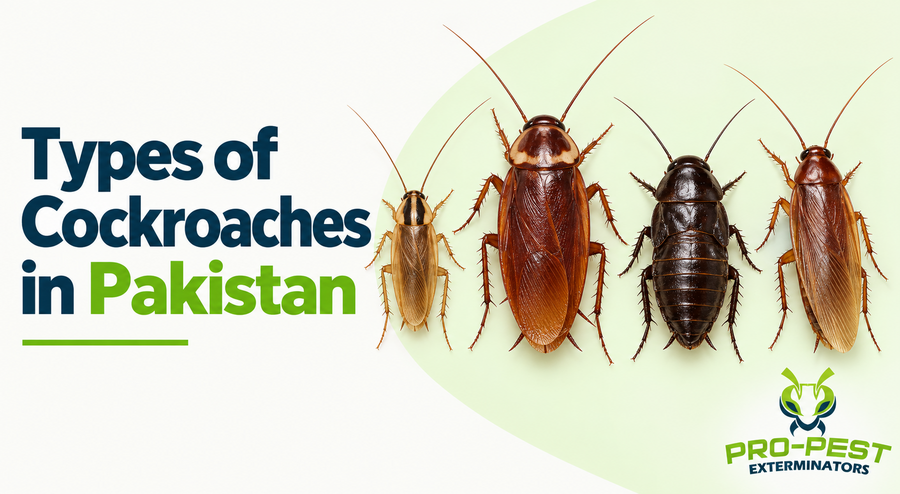
The main types of cockroaches found in Pakistani properties include German, American, Oriental, and Turkestan cockroaches. Each species has different markings, hiding places, and behaviour. Some form colonies inside kitchens, while others enter buildings through drains, gaps, or outdoor areas.
Correct identification requires more than checking the cockroach’s size. Its colour, markings, wings, hiding location, and life stage provide stronger clues. This guide will help you compare the species and understand what their presence may indicate.
Common Cockroach Species at a Glance
A study of cockroaches in Lahore recorded four species: German, American, Oriental, and Turkestan cockroaches. The German cockroach was the dominant indoor species at the study sites. These findings provide useful evidence about cockroach diversity in Pakistan, although species distribution can vary between cities and property conditions.
| Common name | Biological name | Typical adult size | Main identifying feature | Common location |
|---|---|---|---|---|
| German cockroach | Blattella germanica | 10 to 16 mm | Two dark stripes behind the head | Kitchens and food-handling areas |
| American cockroach | Periplaneta americana | 35 to 53 mm | Reddish-brown body with a pale pronotum border | Drains, sewers and utility areas |
| Oriental cockroach | Blatta orientalis | 20 to 32 mm | Glossy dark-brown or black body | Damp and poorly ventilated areas |
| Turkestan cockroach | Shelfordella lateralis | Around 25 to 30 mm | Males are reddish; females are darker with pale markings | Outdoor cracks, service boxes and ground-level spaces |
Use these measurements as approximate guides. Age, sex, nutrition, and stage of development can affect appearance.
What Is the Biological Name of a Cockroach?
Cockroach is a general name for thousands of related insects. It is not the name of one biological species.
Cockroaches belong to the insect order Blattodea. Modern biological classification also places termites within this order. Each cockroach species has its own scientific name. For example, the German cockroach is Blattella germanica, while the American cockroach is Periplaneta americana.
People sometimes use Periplaneta americana as the biological name of cockroach in school notes. That answer refers to one species only. A complete answer should provide the order Blattodea and name the particular species being discussed.
Characteristics of a Cockroach
The physical characteristics of cockroach species vary, but most share several features:
- A flat, oval body that can enter narrow cracks
- Six legs with spines
- Two long antennae
- A shield-like plate called the pronotum behind the head
- Chewing mouthparts
- Two small appendages called cerci at the end of the abdomen
- Wings or wing pads in many adult species
Young cockroaches are called nymphs. They do not have fully developed wings and may have different colours or patterns from adults. Nymphs shed their exoskeleton several times as they grow.
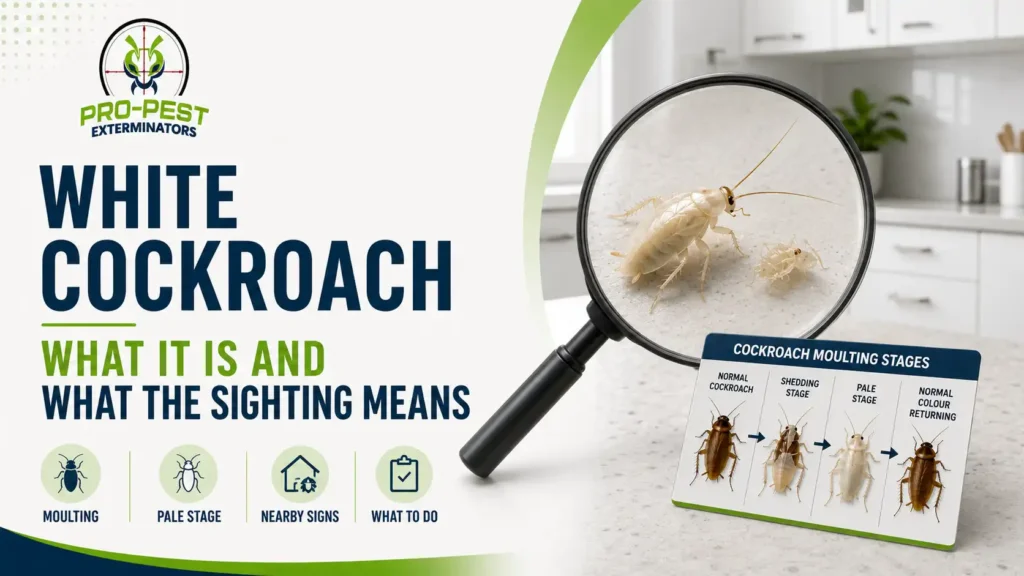
A cockroach that has just molted appears white or cream because its new exoskeleton has not hardened. This temporary appearance causes people to mistake a white cockroach for a separate species.
Four Types of Cockroaches Recorded in Pakistan
1. German Cockroach
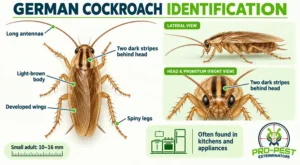
The German cockroach is a small, light-brown species with two dark parallel stripes on the pronotum. Adults usually measure between 10 and 16 millimetres. Both sexes have wings, although they rarely fly.
This species prefers warm indoor areas with food and moisture. Common hiding places include:
- Kitchen cabinet hinges
- Drawer runners
- Spaces behind refrigerators
- Areas under sinks
- Gaps around cooking appliances
- Food-storage and preparation areas
German cockroaches commonly enter properties through cartons, grocery packaging, used appliances, furniture, or items transferred between buildings. They can also move through pipe openings and shared walls in apartments.
Finding several sizes together provides an important clue. Small nymphs, larger nymphs, and adults in the same kitchen usually indicate reproduction nearby. Egg cases, dark droppings, shed skins, and activity inside cabinet joints provide further evidence.
Strongest identification clue: A small, light-brown cockroach with two dark stripes behind its head, found repeatedly inside a kitchen.
2. American Cockroach
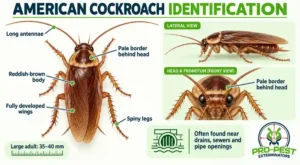
The American cockroach is one of the largest cockroaches associated with buildings. Adults usually have a reddish-brown body and a pale yellow or cream border around the pronotum.
Adult males and females have developed wings. They may glide or fly short distances under warm conditions, although people usually see them running.
American cockroaches favour warm, humid areas such as:
- Sewer lines
- Bathroom and kitchen drains
- Manholes
- Utility rooms
- Pipe ducts
- Commercial kitchens
- Damp storage areas
A large cockroach appearing near a bathroom drain may have entered through plumbing or another structural opening. One adult near a drain does not confirm that a colony lives inside the kitchen. Repeated sightings, nymphs, egg cases, and activity away from the drain provide stronger evidence of an indoor problem.
Strongest identification clue: A large reddish-brown cockroach with a pale marking behind the head, often found near drains or sewer-connected areas.
3. Oriental Cockroach
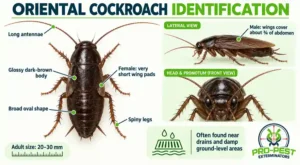
The Oriental cockroach has a broad, glossy body that appears dark brown or almost black. Adult females have short wing pads, while adult males have wings that cover part of the abdomen. Neither sex flies.
This species favours damp, dark locations. It may appear in:
- Ground-level storage areas
- Drains and pipe spaces
- Areas around leaking plumbing
- Damp service rooms
- Organic waste
- Cracks close to the soil
- Poorly ventilated spaces
People may confuse Oriental cockroaches with dark American cockroaches or black beetles. The Oriental species has a darker and more uniform appearance than the American cockroach. It also lacks the pale border that surrounds the American cockroach’s pronotum.
Beetles usually have a harder, more rounded body and shorter antennae. Cockroaches have flatter bodies, longer antennae, and visible cerci at the rear.
Strongest identification clue: A broad, glossy black or dark-brown cockroach found in a damp, ground-level location.
4. Turkestan Cockroach
The Turkestan cockroach shows a clear difference between adult males and females.
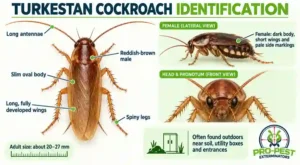
Adult males have a slender reddish or orange-brown body with long yellowish wings. Adult females have a broader dark-brown or black body, pale markings around the pronotum, and short wings. These differences can make the two sexes appear like separate species.
Turkestan cockroaches usually live outdoors. Likely hiding places include:
- Cracks close to the ground
- Service and utility boxes
- Hollow block walls
- Outdoor drains
- Damp soil pockets
- Debris around buildings
Males may fly towards lights and enter through open doors or windows. An isolated male inside a room may have entered from outside. It does not provide the same evidence of indoor breeding as several German cockroach nymphs inside a cabinet.
Strongest identification clue: A reddish, winged male or a dark female with pale markings found near outdoor or ground-level harbourage.
Which Cockroaches Are Commonly Found in Kitchens?
The German cockroach presents the greatest concern when small cockroaches repeatedly appear inside kitchen cabinets and appliances. Its small body allows it to occupy hinges, electrical spaces, and narrow joints that remain hidden during normal cleaning.
Other species can also appear in kitchens:
| Kitchen observation | Possible explanation |
|---|---|
| Several small cockroaches inside cabinets | German cockroach colony |
| Small adults and wingless nymphs together | Indoor reproduction nearby |
| One large reddish-brown cockroach near the sink | Possible American cockroach entry |
| Large cockroaches appearing from a floor drain | American or Oriental cockroach activity |
| Pale cockroach behind an appliance | A recently molted cockroach |
| Dark glossy cockroach in a damp ground-floor kitchen | Possible Oriental cockroach |
The location provides one clue. Markings, colour, size, wings, and infestation evidence must support the identification.
Which Cockroaches Live Inside Houses?
German cockroaches readily establish colonies inside houses, apartments, restaurants, and other heated buildings. Food, warmth, moisture, and narrow hiding places allow them to complete their life cycle indoors.
American and Oriental cockroaches can enter houses through drains, pipe gaps, door thresholds, and ground-level openings. Their presence may reflect an entry problem connected with sewers, moisture, or outdoor harbourage.
Turkestan cockroaches mainly live outdoors. Adult males may enter buildings because lights attract them.
A single adult cannot reveal the full extent of a problem. The following evidence gives a clearer indication of indoor breeding:
- Adults and nymphs appearing together
- Egg cases attached to or hidden near surfaces
- Repeated sightings in the same room
- Droppings inside cabinets or drawers
- Shed skins near cracks
- Activity when lights turn on at night
- A persistent musty smell near harbourage
Which Types of Cockroaches Can Fly?
Wings do not always indicate strong flight. Some cockroaches have developed wings but rarely use them.
| Species | Wing development | Normal flight behaviour |
|---|---|---|
| German cockroach | Adults have wings | Rarely flies |
| American cockroach | Adults have developed wings | May glide or fly short distances |
| Oriental cockroach | Wings differ between males and females | Does not fly |
| Turkestan cockroach | Males have long wings; females have short wings | Males can fly or glide |
Temperature, sex, species, and surroundings affect flight behaviour. A winged cockroach inside a room may have flown towards a light, entered through a window, or climbed through another opening.
Adult Cockroach, Nymph, or Recently Molted Cockroach?
Life stage changes a cockroach’s appearance.
| Feature | Adult | Nymph | Recently molted cockroach |
|---|---|---|---|
| Size | Full species size | Smaller | Depends on its development stage |
| Wings | Species and sex dependent | Missing or undeveloped | Species and stage dependent |
| Colour | Mature species colour | May appear darker or differently patterned | White or cream temporarily |
| Exoskeleton | Hard | Hard between molts | Soft immediately after molting |
| Identification value | Useful when markings are visible | Requires comparison with the same species | Colour alone cannot identify the species |
Small cockroaches are not always babies. An adult German cockroach remains much smaller than an adult American cockroach. Compare body markings and hiding location before estimating the life stage.
Does One Cockroach Mean There Is an Infestation?
One cockroach confirms activity, but it does not reveal the population size or colony location.
One large American or Turkestan cockroach may have entered through a drain, window, doorway, or outdoor gap. Several German cockroach nymphs inside kitchen cabinets provide stronger evidence of an indoor breeding population.
Inspect the immediate area for:
- Egg cases
- Droppings
- Shed skins
- Nymphs
- Dead cockroaches
- Smear marks
- Repeated nighttime activity
Skin irritation alone cannot confirm cockroach activity. Marks that people call a cockroach bite may have other causes and require careful assessment.
Why Correct Identification Matters
Species identification helps determine where the cockroaches may be living and how they enter the property.
A German cockroach points towards concealed kitchen harbourage. An American cockroach near a drain directs attention towards plumbing and sewer entry. An Oriental cockroach suggests damp, dark areas. A Turkestan cockroach may lead the inspection towards outdoor cracks and utility spaces.
The inspection process used by Pro Pest Exterminators considers the species, life stages, activity points, moisture conditions, and possible entry routes together. These findings determine whether the property requires targeted cockroach control in Karachi.
Property size, infestation severity, harbourage, and required treatment areas can also affect the final cockroach control cost.
Conclusion
Reliable cockroach identification combines appearance with location and behaviour.
Small cockroaches with two dark stripes inside kitchen cabinets usually point towards German cockroaches.
Large reddish-brown cockroaches near drains may be American cockroaches. Glossy black cockroaches in damp areas may be Oriental cockroaches. Reddish winged males near outdoor entry points may be Turkestan cockroaches.
Pictures provide a useful starting point. Body markings, life stage, hiding location, and evidence of reproduction provide a more dependable identification. Repeated sightings, nymphs, egg cases, or activity in several rooms indicate that the property needs a closer inspection.
Professional pest control services in Karachi can identify the active species, locate its harbourage or entry route, and determine the required treatment areas.
Frequently Asked Questions
How many types of cockroaches are there?
There are approximately 4,500 described cockroach species worldwide, although scientists continue to identify and classify additional species. Only about 30 species regularly live around people, and an even smaller number commonly infest homes and commercial buildings. Pakistani research has recorded German, American, Oriental, and Turkestan cockroaches at the studied locations.
What are the distinct signs of a German cockroach infestation versus an American one?
A German cockroach infestation usually produces several small cockroaches in different life stages inside kitchens. Common signs include nymphs in cabinet hinges, pepper-like droppings in drawers, egg cases near appliances, and activity when the kitchen light turns on at night. These signs suggest that the cockroaches are breeding inside the property.
An American cockroach problem usually involves large reddish-brown adults near bathroom drains, kitchen pipes, manholes, or damp utility areas. Dead adults on the floor, repeated nighttime drain sightings, and activity around sewer-connected openings may indicate continued entry. One American cockroach near a drain may have entered the property without establishing an indoor colony. Nymphs and egg cases provide stronger evidence of reproduction nearby.
What is the deadliest cockroach?
There is no scientifically recognized “deadliest cockroach.” Cockroaches do not have venom and do not hunt people. The German cockroach creates one of the greatest indoor health concerns because it readily forms large colonies inside buildings, contaminates food-contact areas, and produces allergens that can trigger asthma and allergic reactions. The actual risk depends on the infestation level, sanitation conditions, and the health of exposed occupants.
Have roaches ever killed a human?
Roaches do not normally kill humans through an attack or bite, and public-health authorities do not classify them as directly lethal insects. Heavy infestations can still create serious indirect health risks. Cockroach allergens can contribute to severe asthma attacks in sensitive people, while cockroaches can mechanically carry microorganisms onto food and preparation surfaces. These risks make persistent infestations a health concern even though the cockroaches do not directly attack humans.