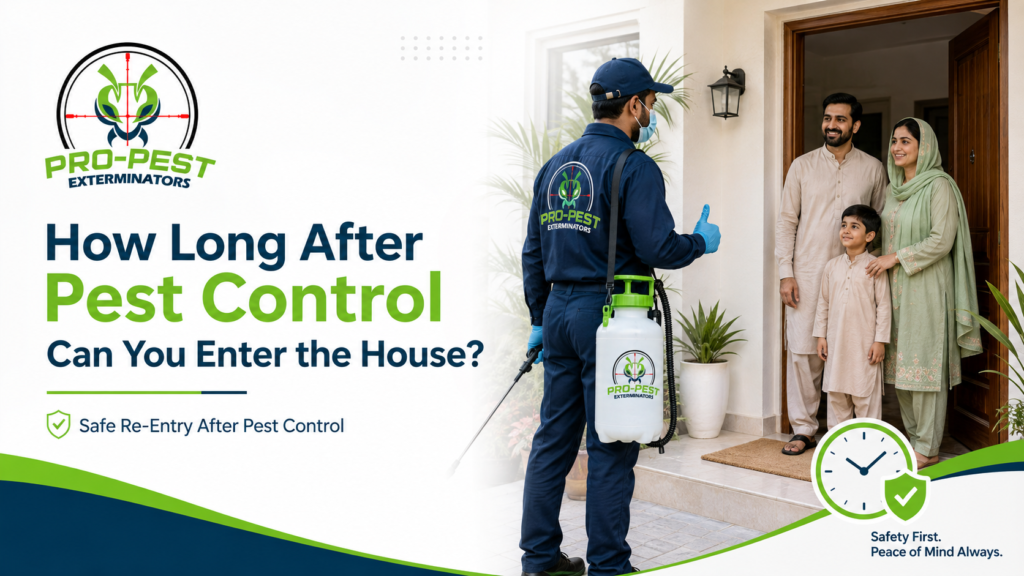
Homeowners often receive different instructions about when to return after pest control. The waiting period varies according to the product, application method, treated rooms, and drying time.
If you want to know how long after pest control you can enter the house, follow the re-entry instructions provided for the treatment used in your home. Some indoor treatments require occupants to remain outside for several hours, while targeted treatments place products only in selected areas and involve different access conditions.
This matters in Karachi homes where pest treatment often covers kitchens, washrooms, bedrooms, cupboards, drains, balconies, or several rooms during one visit. The technician provides the return time and identifies any areas with restricted access.
How Long After Pest Control Can You Enter the House Safely?
Household re-entry begins after the recommended waiting period ends and treated surfaces meet the required conditions for normal use.
The waiting period depends on the treatment used. A liquid spray, targeted gel application, bait station, or localized crack treatment creates different access requirements because each method treats different areas and surfaces.
| Treatment situation | What affects re-entry |
|---|---|
| Indoor liquid spray | Product instructions, drying time, and treated rooms |
| Targeted gel application | Placement locations and access to treated points |
| Rodent bait stations | Station placement and access for children or pets |
| Localized crack treatment | Product used and the specific area treated |
| Broad indoor application | Waiting period, drying, and ventilation instructions |
A fixed number of hours does not apply to every treatment. The stated re-entry period relates to the product and application used at the property.
What Do You Need to Check Before Going Back Inside?
Check the waiting period, treated surfaces, ventilation instructions, and restricted areas before normal household activity resumes.
A typical Karachi apartment or house often has treatment around kitchen cabinets, wall edges, washroom corners, drains, cupboards, or other pest activity points. These locations require attention because some surfaces remain part of the treatment area even after household access resumes.
Confirm that:
- the recommended re-entry period has ended
- sprayed surfaces have dried where required
- rooms have received the recommended ventilation
- children remain away from restricted treatment points
- pets have no access to recently treated surfaces
- kitchen surfaces are ready for normal use
- restricted treatment areas remain undisturbed
A professional pest control service in Karachi provides these instructions according to the pest problem, treatment method, and areas treated in the property.
When Do Children and Pets Return After Pest Control?
Children and pets return after the required re-entry conditions have been met.
This requires extra attention in family homes because children frequently sit or play close to floors, furniture edges, and lower wall areas. Pets also walk across surfaces, investigate corners, and later lick their paws.
Pet bowls, bedding, toys, children’s items, and other frequently handled objects remain away from treatment areas during the service. Cockroach gel and rodent bait also require controlled placement because these products remain active after normal household access resumes.
Their placement therefore stays inaccessible to children and pets.
When Is a Bedroom Ready to Use After Pest Control?
A bedroom returns to normal use after the treatment re-entry period ends and treated areas meet the required occupancy conditions.
The timing depends on whether the bedroom received treatment and which areas were treated. During bed bug treatment, treatment often covers bed frames, furniture joints, skirting, nearby cracks, and other hiding areas.
The bedroom therefore follows the re-entry instructions attached to that treatment. In Karachi apartments where several family members share limited indoor space, room-specific re-entry instructions help identify which areas are available first and which remain restricted.
The treatment instructions determine room access rather than the time of day when the service took place.
When Does Ventilation Start After Pest Control?
Ventilation starts according to the instructions attached to the treatment.
Some indoor treatments include a ventilation period after the main waiting time. This is particularly relevant in enclosed kitchens, bedrooms, washrooms, and apartments with limited airflow.
The service instructions identify whether the property requires:
- open windows
- open balcony doors
- exhaust fans
- ceiling fans
- room-specific ventilation
- extended closure of selected treated areas
Ventilation requirements vary according to the application used.
Does Chemical Smell Indicate When the House Is Ready for Re-Entry?
No. Odor does not determine re-entry status.
Some pesticide formulations produce a noticeable smell, while other treatments produce little detectable odour. A weak smell does not confirm that a treated surface is ready for contact, and a strong smell does not establish the exposure level by itself.
Re-entry depends on the stated waiting period, surface condition, and ventilation requirements. An unusually strong odour after the expected re-entry period requires confirmation from the technician before normal use of the affected room resumes.
What Cleaning Is Required After Pest Control?
Cleaning focuses on household-use surfaces while treatment areas remain undisturbed for the stated period.
Many households mop floors and wash corners soon after returning. Immediate cleaning of treatment points removes product from locations where pest activity occurs and reduces the amount of treatment left in those areas.
Technicians often apply treatment around:
- kitchen cabinet edges
- wall and floor junctions
- washroom corners
- drain areas
- cracks
- cupboard gaps
- pest movement points
The service instructions identify which areas require immediate cleaning and which remain untouched. Kitchen countertops, dining areas, and frequently handled surfaces often have separate cleaning instructions, so treated and untreated surfaces follow different post-service handling requirements.
What Happens If You Enter the House Too Early?
Leaving the treated area ends further contact with the application before the stated re-entry period.
Move to fresh air and contact the service provider to confirm the remaining re-entry time. Providing clear information about the treatment helps the service provider identify the relevant exposure conditions.
Provide the following information:
- when the treatment finished
- which room you entered
- how long you remained inside
- which treatment was used
- whether contact occurred with a treated surface
Any unusual symptoms following possible pesticide exposure require medical assessment. Keep the product or treatment information available for reference.
How Do Karachi Families Plan for Pest Control Re-Entry?
Re-entry planning starts before the service begins.
This is particularly relevant in homes with children, elderly family members, pets, or several occupants. Planning the temporary household arrangement in advance reduces confusion about where people stay and when each treated area becomes available again.
Before treatment, establish:
- where family members will stay during the service
- who will manage pets
- which rooms require treatment
- whether food requires moving or covering
- the expected return time
- which rooms become available first
- which areas remain untouched
Apartment residents also account for shared hallways, balconies, building access, and temporary arrangements with nearby family members during the waiting period.
Pro Pest Exterminators assesses the pest problem and treatment areas before service so re-entry instructions correspond with the work planned for the property.
What Happens When Only the Kitchen or One Room Receives Treatment?
Access restrictions follow the area treated and the application used.
A full-house absence does not apply to every localized treatment. When pest activity is limited to a specific room, the treatment plan identifies whether restrictions apply only to that area or to the wider property.
For example, cockroach activity often concentrates around kitchen cabinets, sinks, appliances, drains, and storage areas. Professional cockroach control services use treatment methods according to the infestation location and property conditions.
The treatment plan identifies:
- whether the entire home remains vacant
- whether access restrictions apply only to one room
- whether doors remain closed
- whether untreated rooms remain in normal use
- whether children or pets require additional access restrictions
This gives apartment and family-home occupants a room-specific re-entry plan.
What Happens When Rodent Treatment Uses Bait Stations Instead of Indoor Spray?
Rodent bait treatments follow access requirements based on controlled bait placement rather than broad indoor spraying.
During rodent control services, technicians place bait stations in areas associated with rodent activity. Normal property access depends on the treatment instructions, while every bait placement remains protected.
Bait stations stay in their assigned locations and remain inaccessible to children and pets.
The Factors That Determine Re-Entry After Pest Control
No universal waiting period applies to every residential pest-control treatment. How long after pest control can you enter the house depends on the treatment carried out inside the property, the product instructions, treated rooms, drying conditions, and access requirements.
Before the technician leaves, confirm:
- the exact re-entry time
- which rooms remain restricted
- whether treated surfaces require drying
- when ventilation begins
- when children and pets return
- which surfaces require cleaning
- which treatment areas remain untouched
These treatment-specific instructions establish the correct return time for the property.
Frequently Asked Questions
Do I need to remove food from the kitchen before pest control?
Food, utensils, cookware, and open containers require protection or removal when treatment takes place near kitchen storage or preparation areas. The preparation instructions identify the affected items and areas.
Do clothes need to come out of wardrobes before pest control?
Wardrobe preparation depends on whether treatment covers the inside of the wardrobe or nearby pest activity points. The treatment plan identifies which storage areas require preparation.
When do elderly family members return after pest control?
Elderly household members follow the same treatment-specific re-entry conditions. Existing respiratory or medical conditions require additional guidance from the relevant healthcare professional.
What happens to pet food and water bowls during treatment?
Pet food, water bowls, bedding, and toys remain outside treatment areas during the service. These items return after the relevant area resumes normal use.
Do kitchen utensils need to be moved before pest control?
Utensils require protection or removal when treatment covers cabinets, food storage areas, or nearby preparation surfaces. The treatment plan identifies which kitchen items require preparation.